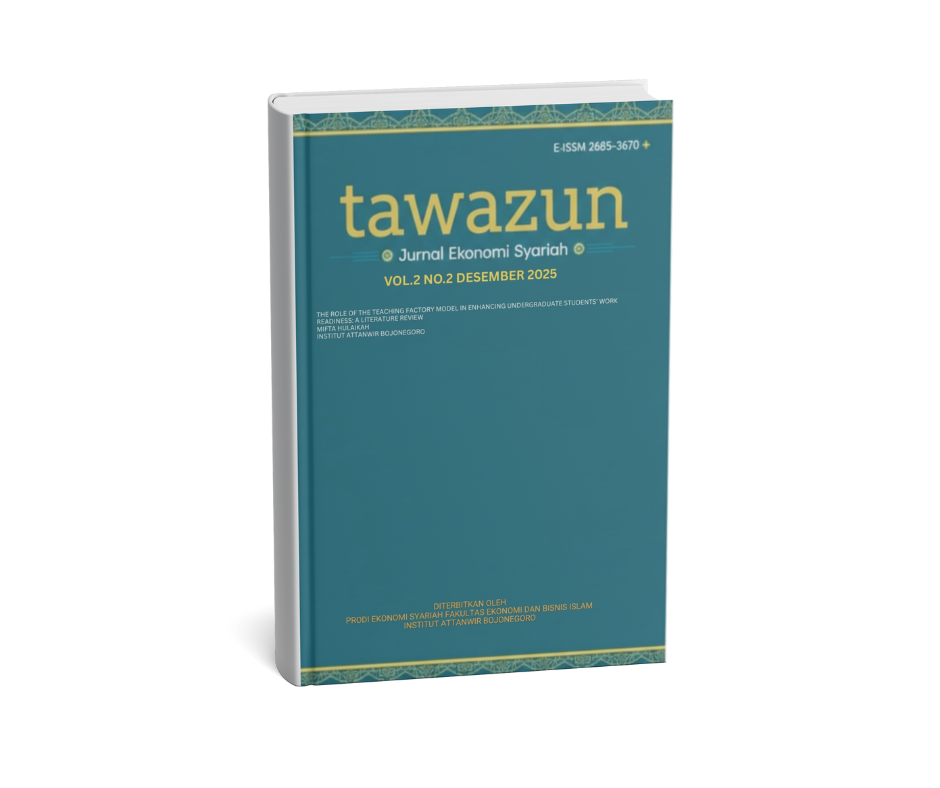
The Role of the Teaching Factory Model in Enhancing Undergraduate Students’ Work Readiness: A Literature Review
Keywords:
teaching factory, readiness to workAbstract
Education in the era of Industry 4.0 demands learning models that are able to bridge the gap between theoretical knowledge and real-world industrial needs. One innovative approach that addresses this challenge is the Teaching Factory model, which integrates industry-based production processes into the educational environment. This study aims to examine the role of the Teaching Factory model in enhancing the work readiness of undergraduate students, particularly in terms of technical skills, soft skills, adaptability, and professional attitudes. Using a literature review method, this research synthesizes findings from previous empirical studies related to Teaching Factory implementation, work readiness, and employability skills in vocational and higher education contexts. The review focuses on how Teaching Factory learning replicates industrial conditions, encourages collaboration with industry partners, and provides experiential learning opportunities that foster both hard and soft skills. The findings indicate that the Teaching Factory model has a significant positive impact on students’ work readiness, including personal and social maturity, work attitudes, problem-solving abilities, teamwork, and entrepreneurial spirit. Moreover, the model contributes to improved employability by familiarizing students with real production standards and workplace culture. The study concludes that the Teaching Factory model is an effective pedagogical strategy for preparing undergraduate students to meet the dynamic demands of the labor market. It recommends further longitudinal and empirical research to evaluate the long-term impact of Teaching Factory-based learning on graduates’ career development and professional success.
Downloads
Published
Issue
Section
License
Authors who publish with this journal agree to the following terms:
- Authors retain copyright and grant the journal right of first publication with the work simultaneously licensed under a Creative Commons Attribution License that allows others to share the work with an acknowledgement of the work's authorship and initial publication in this journal.
- Authors are able to enter into separate, additional contractual arrangements for the non-exclusive distribution of the journal's published version of the work (e.g., post it to an institutional repository or publish it in a book), with an acknowledgement of its initial publication in this journal.
- Authors are permitted and encouraged to post their work online (e.g., in institutional repositories or on their website) prior to and during the submission process, as it can lead to productive exchanges, as well as earlier and greater citation of published work.