
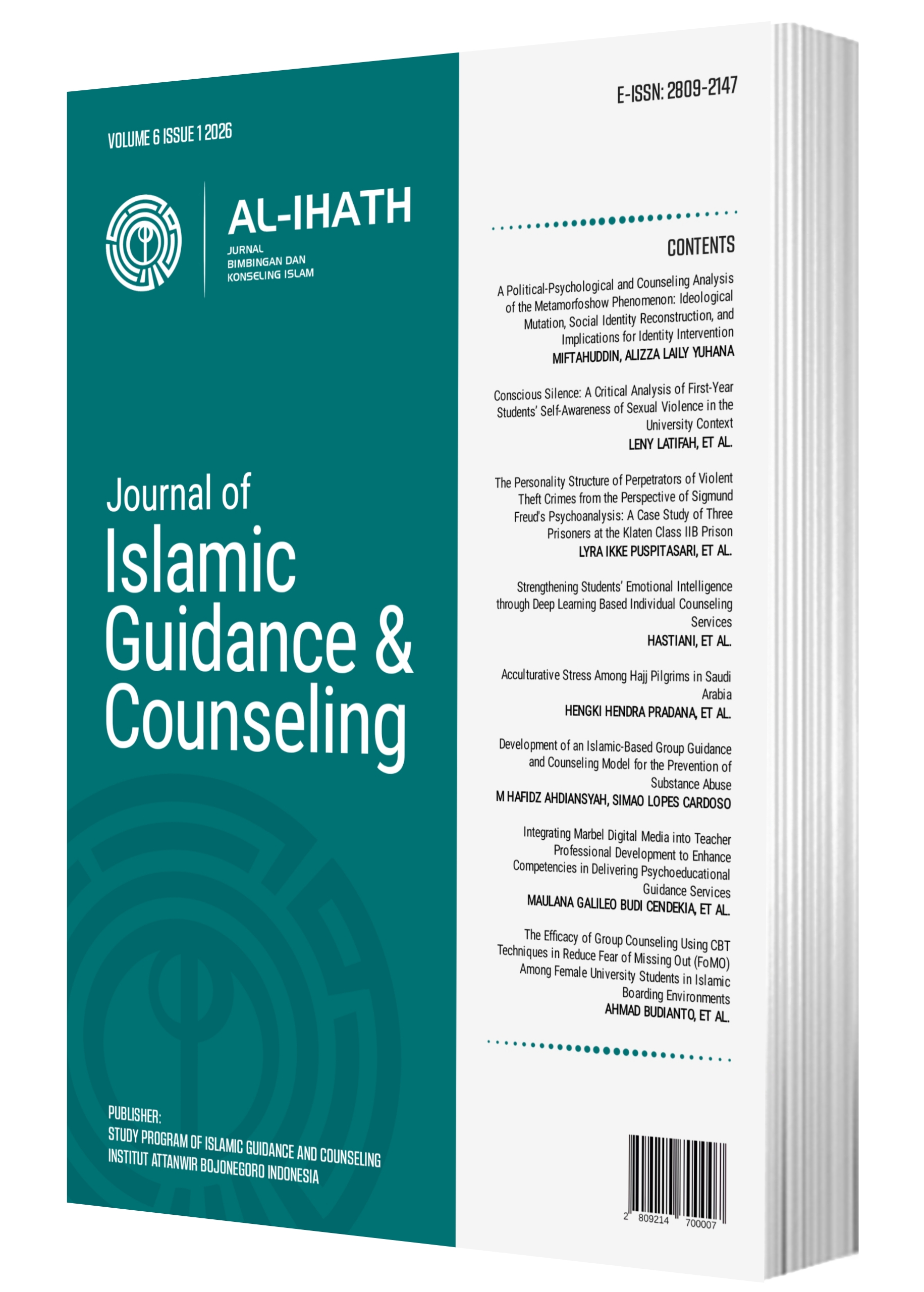
The Personality Structure of Perpetrators of Violent Theft Crimes from the Perspective of Sigmund Freud's Psychoanalysis: A Case Study of Three Prisoners at the Klaten Class IIB Prison
DOI:
https://doi.org/10.53915/jbki.v6i1.71Keywords:
Personality Structure, Id, Ego, Superego, Violent TheftAbstract
Violent theft is a type of crime that still has a high incidence rate in Indonesia and causes complex social impacts. Criminal behavior in committing unlawful acts is not only influenced by economic factors, but also related to the psychological aspects of the perpetrator that affect their way of thinking, decision making, and control of behavioral impulses. This study aims to analyze the personality structure of perpetrators of violent theft based on Sigmund Freud's psychoanalytic perspective, particularly the dynamics of the id, ego, and superego. This study uses a qualitative approach with a case study method on three prisoners at the Klaten Class IIB Prison. Data collection techniques were carried out through interviews, observations, and documentation to obtain a comprehensive picture of the subjects' backgrounds and psychological dynamics. The data obtained was then analyzed inductively using source triangulation to obtain the validity of the findings. The results showed that each perpetrator had a different personality structure. Subject 1 showed a weak superego function at the time of the crime, which was followed by the emergence of a post-event superego in the form of inner conflict and guilt. Subject 2 showed a dominant ego oriented towards realistic considerations in fulfilling life needs, while subject 3 tended to show weak ego control with a dominant impulsive id drive. However, all subjects showed an imbalance in the interaction between the id, ego, and superego in the decision-making process prior to committing the crime.
References
Adinda, I. G. A. S., & Mahadewi, K. J. (2022). Pencurian Disertai Kekerasan dalam Pandangan Ilmu Kriminologi. Jurnal Kewarganegaraan, 6(3), 5134–5142. https://doi.org/https://doi.org/10.31316/jk.v6i3.3901
Aini, I. N., & Raharjo, R. P. (2024). Ego In The Main Character In The Novel “Pulang” By Tere Liye. Jurnal Disastri, 6(2), 130–138. https://doi.org/10.33752/disastri.v6i2.5817
Alifah, A. M., Prihartanti, N., & Rosyidi, I. (2015). Dinamika Psikologis Narapidana Anak Pelaku Pembunuhan: Studi Kasus di Lapas Anak Kutoarjo. Jurnal Indigenous, 13(2), 9–18.
Azzam, M. F., Junior, R. G., & Hosnah, A. U. (2024). Penerapan Sanksi Pidana Pada Pasal 170 Kuhp; Analisa Pelaku Tindak Pidana Pencurian Dengan Kekerasan. Indonesian Journal of Islamic Jurisprudence,Economicand Legal Theory, 2(1), 350–360. https://doi.org/https://doi.org/10.62976/ijijel.v2i1
Creswell, J. W. (2013). Research Design Pendekatan Kualitatif, Kuantitatif, dan Mixed. Pustaka Pelajar.
Dewi, A. P., Erlansyah, A. C., Jannah, N., Berliana, W. F., & Supriyadi, T. (2025). Integrasi Prinsip Dasar Psikologi Dalam Pemahaman Perilaku Kriminal. Netizen: Journal Of Society And Bussiness, 2(6), 182–195.
Feist, J., & Feist, G. J. (2010). Theories of Personality (7th ed.). Salemba Humanika.
Jing, Y., & Chenglian, B. (2020). An Analysis of the James ’ s Tripartite Personality in Everything I Never Told You from the Perspective of Psychoanalysis. The Frontiers of Society, Science and Technology, 2(12). https://doi.org/10.25236/FSST.2020.021201
Kadir, Z. K. (2024). Psychoanalytic and Crime: Is Freud’s Theory Still Applicable in Criminological Research? Media Keadilan: Jurnal Ilmu Hukum, 15(2), 95–110. https://doi.org/10.31764/jmk.v15i2.27081
Lestari, H. S., & Damayanti, A. K. (2024). Psikologi Kepribadian. Penerbit NEM.
Marlina, R., Cecilia, D., & Hafizh, M. (2024). Terbatasnya ketersediaan lapangan. Journal of Economics and Development (JEnD), 1(2), 46–59.
McAdams, D. P., & Mayukha, A. (2024). Hiding in plain view: An historical perspective on the study of morality in personality psychology. Journal of Personality, 92(3), 666–682. https://doi.org/10.1111/jopy.12808
More, H. L. (2023). Psychodynamic Theory of Criminal Behaviour. The Legal Quotient. https://thelegalquotient.com/criminal-laws/criminology/psychodynamic-theory-of-criminal-behaviour/2695/
Mulyana, kurniawan eka. (2025). Polisi Tangkap 3 Tersangka yang Sayat Leher Sopir Taksi Online di Klaten, Termasuk Satu Perempuan. Kompas.Com. https://www.kompas.tv/regional/589065/polisi-tangkap-3-tersangka-yang-sayat-leher-sopir-taksi-online-di-klaten-termasuk-satu-perempuan
Mutyarani, D. N., Amareta, J. D., & Hardiyanti, D. (2024). Analysis of Sigmund Freud Psychoanalysis Theory: Id Ego Superego on Personal Character in The Novel The Tragedy Paper. English Language & Literature International Conference, 7(1), 2579–7549. https://jurnal.unimus.ac.id/index.php/ELLIC/index
Nasution, abdul fattah. (2023). Metode Penelitian Kualitatif. CV. Harfa Creative.
Nurfajriani, W. V., Ilhami, M. W., Mahendra, A., Sirodj, R. A., & Afgani, M. W. (2024). Triangulasi Data Dalam Analisis Data Penelitian Kualitatif. Jurnal Ilmiah Wahana Pendidikan, 10(17), 826–833. https://doi.org/https://doi.org/10.5281/zenodo.13929272
Nursholatiah, Murahim, & Khairussibyan, M. (2022). Struktur Kepribadian Tokoh Utama Kinan Dalam Novel Layangan Putus Karya Mommy Asf Kajian Psikoanalisis: Sigmund Freud. Jurnal Ilmiah Profesi Pendidikan, 7(3c), 1711–1717. https://doi.org/10.29303/jipp.v7i3c.840
Nuryana, M. R., & Rohanda, R. (2025). Dinamika Id, Ego, dan Superego Kepribadian Tokoh Utama Dalam Novel Proyek Maut Karya Eddie Sindunata. Journal of Comprehensive Science, 4(7), 2119–2135. https://doi.org/10.59188/jcs.v4i7.3435
Polri, P. B. (2025). Data Kejahatan Pusiknas Bareskrim Polri. Pusat Informasi Kriminal Nasional (PUSIKNAS). https://pusiknas.polri.go.id/data_kejahatan
Pramesti, G. A. F., Hernika, B., & Kurniawan, E. D. (2023). Analisis Id, Ego, Super Ego Pada Tokoh Tania Dalam Novel Ananta Prahadi Karya Risa Saraswati. Jurnal Humaniora Teknologi, 9(2), 52–58. https://doi.org/10.34128/jht.v9i2.150
Putri, A. A., Amanah, A. H., Putri, T. A., Artanto, R. C., Larasati, K. D., & Arisanti, F. Z. (2025). Peran Hukum Pidana Pada Kasus Pembegalan Di Pemalang. Lentera Ilmu, 1(2), 124–131. https://doi.org/10.59971/li.v1i2.61
Putri, H. J., & Murhayati, S. (2025). Metode Pengumpulan Data Kualitatif. Jurnal Pendidikan Tambusai, 9(2), 13074–13086. https://jptam.org/index.php/jptam/article/view/27063/18482
Raihan, N., Maryani, H., Sintara, D., & Novita, T. R. (2025). Peranan Hukum Dalam Mengatasi Kondisi Ekonomi Rendah Yang Mengakibatkan Tingkat Kejahatan di Kelurahan Kuala Silau Bestari. Al-Zayn : Jurnal Ilmu Sosial & Hukum, 3(3), 1556–1562. https://doi.org/10.61104/alz.v3i3.1406
Sadida, S., & Septiyana, R. (2025). Analisis Cerpen “Nyaris Broken Home” Karya Rora Rizki Wandini Kajian Psikoanalisis Sigmund Freud. Jurnal Vokatif: Pendidikan Bahasa, Kebahasaan Dan Sastra, 2(1), 20–29.
Saputra, V. A., Ikhwan, M. F., & Kurniawan, E. D. (2024). Judul Jelas, Analisis Dinamika Kepribadian Id, Ego, Superego Pada Tokoh Utama Cerita Pendek “rupanya aku bisa” Karya maria klavia.a. Jurnal Sains Student Research, 2(1), 516–522. https://doi.org/10.61722/jssr.v2i1.699
Septiani, V. G., Dewantara, D. C., Labibah, N., Vincensia, D., Rawambakue, R. C. N., & Sulistyorini, H. (2022). Beatrice prior’s id, ego and superego described in Veronica Roth’s novel Divergent. UNCLLE (Undergraduate Conference on Language, Literature, and Culture), 2(1), 352–359.
Sugiyono. (2013). Metode Penelitian Kuantitatif Kualitatif dan R&D. Alfabeta.
Sugiyono. (2023). Metode Penelitian Kuantitatif Kualitatif dan R&D. Alfabeta.
Syam, E., & Rosaliza, M. (2020). Kajian Struktur Kepribadian Freud Dalam Kisah 1001 Malam: Studi Psikoanalisis. Jurnal Ilmu Budaya, 17(1), 1–16. https://doi.org/10.31849/jib.v17i1.4708
Syauqii, A. H. (2025). Pelaku Utama Rampok Sopir Taksi Online di Klaten Ditangkap! DetikJateng. https://www.detik.com/jateng/hukum-dan-kriminal/d-7879742/pelaku-utama-rampok-sopir-taksi-online-di-klaten-ditangkap
Tyas, I. S. A., & Widagdo, S. (2025). Struktur Kepribadian Tokoh dalam Novel Perawan Semarang Karya Vidi Widajat Berdasarkan Psikoanalisis Sigmund Freud. Jurnal Onoma: Pendidikan, Bahasa, Dan Sastra, 11(2), 2576–2595. https://doi.org/10.30605/onoma.v11i2.5833
Utami, R. R., & Asih, M. K. (2021). Faktor-faktor determinasi perilaku kejahatan. Jurnal Psibernetika, 14(1), 11–16. https://doi.org/10.30813/psibernetika.v14i1.2407
Utami, S. P., Uswati, T. S., & Khuzaemah, E. (2022). Analisis Tokoh Utama Dalam Novel Merpati Biru Karya Achmad Munif Berdasarkan Teori Kepribadian Sigmund Freud. Jurnal Bahasa Dan Sastra, 16(2), 82–92. https://doi.org/10.24815/jbs.v16i2.26590
Wang, S., & Jian, C. (2024). Study of Mrs. Reed ’ s Multi ‐ dimensional Image from the Perspective of Sigmund Freud ’ s Personality Structure Theory. Journal of Education and Educational Research, 8(2), 2–4.
Yusri, M. I., Rizhan, A., & Iryanti, I. (2025). Tinjauan Yuridis Terhadap Tindak Pidanapencurian Dengan Kekerasan Di Kecamatan Pangean Kabupaten Kuantan Singingi (Studi Putusan Pengadilan Negeri Teluk Kuantan Nomor 26/Pid.B/2023/PN.Tlk). Juhan Perak, 6(1), 388–402.
Downloads
Published
Issue
Section
License
Copyright (c) 2026 Lyra Ikke Puspitasari, Alfin Miftahul Khairi, Prince Kwame Affum

This work is licensed under a Creative Commons Attribution-ShareAlike 4.0 International License.
Authors who publish with this journal agree to the following terms:
- Authors retain copyright and grant the journal right of first publication with the work simultaneously licensed under a Creative Commons Attribution License that allows others to share the work with an acknowledgement of the work's authorship and initial publication in this journal.
- Authors are able to enter into separate, additional contractual arrangements for the non-exclusive distribution of the journal's published version of the work (e.g., post it to an institutional repository or publish it in a book), with an acknowledgement of its initial publication in this journal.
- Authors are permitted and encouraged to post their work online (e.g., in institutional repositories or on their website) prior to and during the submission process, as it can lead to productive exchanges, as well as earlier and greater citation of published work.